
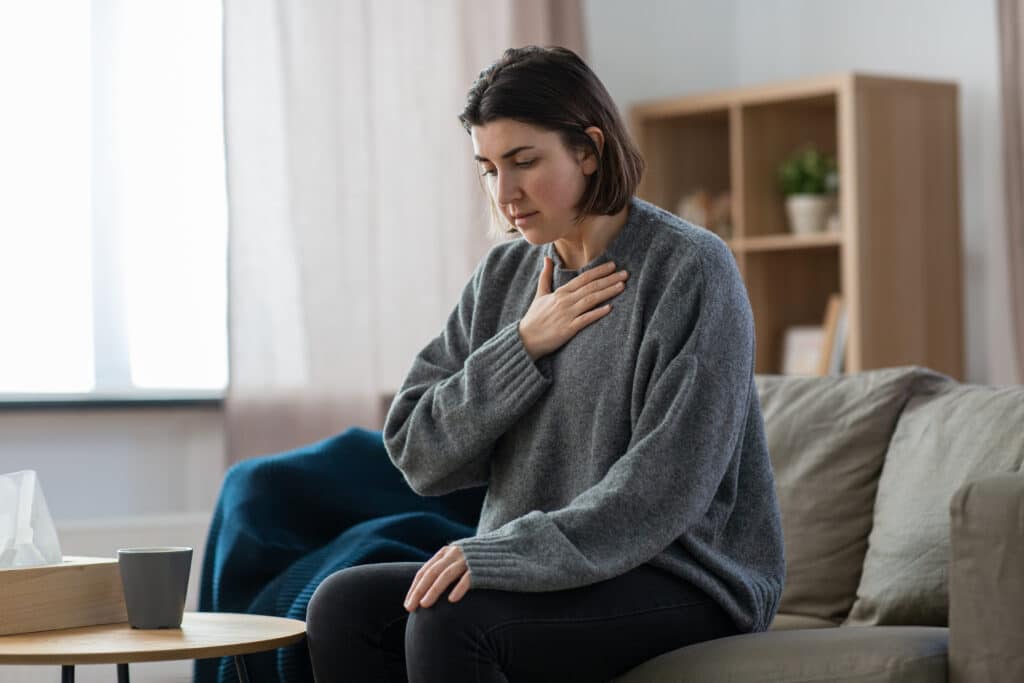
Chest pain, rapid heartbeat, shortness of breath, sweating — these symptoms are terrifying no matter when they strike. And because panic attacks and sudden cardiac symptoms overlap so much, it’s common to wonder which one you’re experiencing. Even doctors sometimes rely on medical testing to tell the difference. Knowing the key distinctions can help you respond quickly and safely. If you’re ever unsure, treat it as a heart emergency.
Below, we break down the most important differences between a panic attack vs. heart attack, using guidance from authoritative medical sources, including the Cleveland Clinic, the American Heart Association, and major cardiovascular programs.
Why These Two Conditions Feel So Similar
Both conditions can cause:
- Chest pain or tightness
- Racing or pounding heartbeat
- Sweating
- Lightheadedness
- Shortness of breath
- A sense of impending doom
The reason? Your body’s stress response activates in both situations — whether it’s a blocked artery (heart attack) or a false alarm triggered by the brain (panic attack).1
But the cause, danger level, and required treatment are completely different.
What a Heart Attack Is — and Why It’s Dangerous
A heart attack (myocardial infarction) happens when blood flow to the heart becomes blocked, usually by a clot or a narrowed artery. Without oxygen, the heart muscle begins to die. Heart attacks are medical emergencies requiring immediate treatment.
Common heart attack symptoms:
- Chest pressure, squeezing, or heaviness (“like an elephant sitting on your chest”)1
- Pain that spreads to the jaw, arm, shoulder, back, or neck
- Shortness of breath not linked to panic
- Nausea or vomiting
- Cold, clammy sweat
- Pain lasting longer than 15 minutes or steadily worsening
- Feeling faint or weak
Heart attacks often occur during physical strain, rest, or even sleep — and symptoms persist regardless of breathing techniques or relaxation.1
What a Panic Attack Is — and Why It Feels Like a Heart Attack
A panic attack is a sudden surge of intense fear, often peaking within 10 minutes. They can occur out of nowhere, even during sleep. Panic attacks activate the body’s fight-or-flight response, triggering intense physical sensations that mimic cardiac distress.2 Panic attacks most often develop in the teens and early twenties in individuals with healthy hearts.
Common panic attack symptoms:
- Sharp, stabbing, or pinpoint chest pain (not usually radiating)1
- Rapid, shallow breathing or hyperventilation
- Tingling or numbness in hands or feet
- Trembling or shaking
- Hot or cold flashes
- Feeling detached or unreal
- Sudden fear of dying or “going crazy”
Because hyperventilation drops CO₂ levels, panic symptoms can feel dramatic and “medical,” even though panic attacks are not life‑threatening.3
Panic Attack vs. Heart Attack: The Key Differences
Understanding the pattern, location, and quality of symptoms can help you distinguish between the two.
1. Chest Pain Pattern
Heart Attack
-
- Feels like pressure, heaviness, squeezing
- May radiate to the left arm, jaw, back, or neck
- Often persists or worsens over time1
Panic Attack
- Sharp, stabbing, or localized pain
- Usually stays in one spot
- May improve with slow breathing1
2. Onset and Duration
Heart Attack
- Symptoms may come on gradually or suddenly
- Usually lasts longer than 15 minutes
- Does not subside with calming techniques1
Panic Attack
- Peaks within 10–20 minutes
- Symptoms often fade as breathing stabilizes
- Can come in waves, but usually improve with grounding or slow breathing
3. Breathing Patterns
Heart Attack
- Shortness of breath unrelated to panic
- Breathing feels ineffective, heavy, or restricted1
Panic Attack
- Rapid, shallow breathing
- Hyperventilation triggers tingling, dizziness, or numbness3
4. Additional Symptoms
Heart Attack
- Cold sweats
- Nausea or vomiting
- Pain radiating into the upper body1
Panic Attack
- Fear of dying out of proportion to physical symptoms
- Feeling detached from reality (derealization)
- Trembling or sudden urge to flee4
When to Treat It as a Heart Attack
Medical experts are clear: If you are unsure, always treat chest pain as a potential heart attack.
Call emergency services if:
- Chest pain lasts longer than 5–10 minutes
- Pain spreads to the arm, jaw, or back
- You feel faint, weak, or unusually short of breath
- Symptoms feel different from previous panic attacks
Delaying care during a true heart attack can be fatal.
When It’s More Likely a Panic Attack
It may be a panic attack if:
- Symptoms peak quickly and fade within 20 minutes6
- The pain feels sharp or localized
- Slow breathing or grounding reduces symptoms
- You’ve had similar episodes before, and a medical examination found no heart disease
Even if it is “just panic,” the fear feels real — and the discomfort is intense.
What to Do in the Moment
If you suspect a heart attack:
- Call 911 immediately
- Chew an aspirin if advised and not allergic
- Sit down and stay calm
- Do not drive yourself
If symptoms might be panic:
- Slow your breathing (try a long exhale pattern)
- Ground yourself with sensory cues
- Remind yourself that panic peaks and passes
- Seek medical care if symptoms worsen or don’t improve
Why People with Panic Disorder Still Need Cardiac Evaluation
People with anxiety or a history of panic attacks can still experience heart disease. Both Cleveland Clinic and UR Medicine emphasize that new or unusual symptoms should never be dismissed as “just anxiety.”1,5
A comprehensive evaluation can rule out heart issues and provide peace of mind.
Taking the Next Step Toward Relief
Understanding these differences is the first step. Taking action to prevent future panic attacks is the next step.
Freespira is the only FDA‑cleared, medication‑free treatment proven to reduce panic symptoms by retraining CO₂ regulation and breathing stability. If you’re ready to address panic at its physiological root, Freespira may be the solution you’ve been looking for.
Take a free symptom quiz to see if it’s right for you.
FAQ: Panic Attack vs. Heart Attack
1. Can a panic attack mimic a heart attack?
Yes. The symptoms overlap dramatically — chest pain, rapid heartbeat, sweating, and nausea — which makes them easy to confuse.1
2. How long does a panic attack last?
It typically peaks within 5–20 minutes and gradually resolves as breathing normalizes.6
3. Does heart attack pain go away with slow breathing?
No. Heart attack symptoms do not improve with calming techniques and may worsen.1
4. If I’ve had panic attacks before, can I assume new chest pain is panic?
No. A physician should always evaluate new, severe, or unusual chest pain.
5. Is a sense of impending doom always panic?
No — it can occur in both conditions. The quality and duration of chest pain are more reliable clues.1