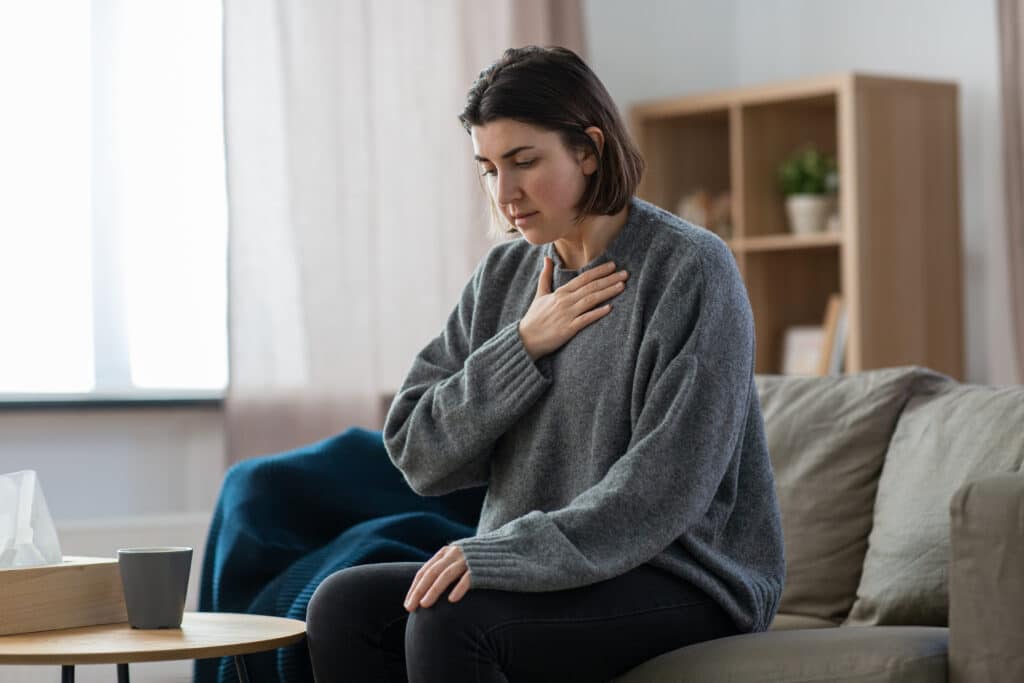
Insomnia and anxiety frequently show up together—and when they do, your sleep rarely fixes itself. Millions of people struggle with chronic sleep problems, nighttime fear, or unexplained awakenings, yet most don’t realize that breathing‑related physiology may be the hidden driver. Understanding how insomnia, anxiety, and panic interact is the first step toward breaking the cycle—and toward finding a scientifically backed breathing solution that can finally bring relief.
Why insomnia rarely comes alone
Insomnia is one of the most common sleep disorders worldwide. Studies show that anxiety disorders are the most prevalent mental health condition globally, and sleep disturbance is one of their most frequent symptoms.1
When people search for insomnia symptoms—like difficulty falling asleep, waking up repeatedly, or feeling wired at night—they often overlook that anxiety and sleep are deeply connected. Many individuals with “just insomnia” are actually experiencing a blend of insomnia‑and‑anxiety physiology, especially hyperventilation, CO₂ sensitivity, and breathing dysregulation that triggers nighttime arousal.
That’s why the typical sleep tips often fall short.
The insomnia, anxiety, and panic cycle (and why it’s so hard to break)
Researchers have identified a reinforcing loop between sleep problems, nighttime anxiety, and physiological panic responses.
1. Insomnia increases anxiety
Sleep deprivation:
- reduces emotional resilience.2
- increases the brain’s sensitivity to threat signals3
- makes normal bodily sensations feel more alarming
Over time, the brain begins to fear bedtime because it associates it with frustration, discomfort, or panic.
2. Anxiety worsens insomnia
When anxiety ramps up, it floods the nervous system with arousal, creating:
- thoughts dominated by worry and uncertainty
- tightness in the chest
- rapid breathing
- stomach fluttering
This sends a powerful “stay awake” signal.
3. Panic attacks can occur during sleep
Nocturnal panic is more common than people think. Symptoms include:
- sudden jolting awake
- gasping for air
- pounding heart
- dizziness
- tingling or numbness4
- intense fear
These episodes often seem random. But many are driven by hyperventilation, which lowers CO₂ and triggers panic‑like sensations.5
4. CO₂‑related breathing issues can trigger awakenings
If CO₂ levels drop during sleep—a hallmark of chronic hyperventilation—the brain misinterprets this as danger and abruptly wakes the body up.6 This leads to:
- repeated awakenings
- fear of falling asleep
- worsening insomnia
Traditional insomnia treatments frequently miss this CO₂‑related pattern. At times, recurrent nighttime panic is associated with sleep apnea.
Why breathing patterns matter more than most sleep advice admits
Common sleep recommendations—limiting blue light, reducing caffeine, using supplements, or meditating—support general sleep hygiene, but they don’t address panic‑driven breathing physiology.
People with insomnia and anxiety often unknowingly slip into chronic over‑breathing. This causes low CO₂, which triggers:
- dizziness
- air hunger
- chest tightness
- sudden awakenings
Clinical studies show that correcting CO₂ levels and stabilizing the breathing rate significantly reduces panic symptoms and nighttime awakenings.7
If your insomnia includes nighttime jolts, air hunger, or unexplained fear, this breathing‑physiology link may be the missing piece.
7 strategies that actually help when insomnia and anxiety collide
While sleep guidelines often recommend structured behavioral approaches, let’s focus here on simple, high‑impact actions that reduce nighttime arousal without relying heavily on any formal methodology:
1. Structure your sleep window
Keep a consistent wake time and avoid spending excessive hours in bed.8 This strengthens your sleep drive and improves sleep continuity.
2. Redesign the pre‑bed transition
Dim lights, reduce stimulation, and allow the body to shift gradually into rest.9
3. Use breathing patterns that lower arousal
Breathing exercises such as the 4‑second inhale, 6‑second exhale, and the physiological sigh have been clinically shown to reduce anxiety and slow the respiratory rate.10
4. Address caffeine, alcohol, and late eating
Both caffeine (within 8 hours) and late‑night alcohol disrupt sleep and increase nighttime awakenings. Eating large or heavy meals too close to bedtime can also interfere with sleep by triggering acid reflux, increasing nighttime arousals, and making it harder for the body to settle into restful sleep.11
5. Use light strategically
Bright morning light and dim evening light support the circadian rhythm, making it easier to fall asleep.12
6. Move your body during the day
Activity improves both mood and sleep quality, reducing the intensity of nighttime anxiety. Regular daytime movement also strengthens your natural sleep–wake rhythm, making it easier to fall asleep at night and reducing the likelihood of middle‑of‑the‑night awakenings.13
7. Treat breathing‑related triggers (the most overlooked step)
If your insomnia includes air hunger, dizziness, nighttime panic, or sudden spikes of wakefulness, then breathing retraining may be beneficial.
If your insomnia comes with a racing heart and sudden awakenings, consider this: the root problem may be CO₂
Most insomnia solutions target thoughts or habits. But when nighttime awakenings are driven by CO₂ imbalance, no amount of sleep hygiene can resolve the underlying trigger.
This is where Freespira becomes uniquely effective.
How Freespira helps
Freespira is an FDA‑cleared digital therapeutic clinically shown to normalize:
- respiratory rate
- CO₂ levels
- breathing stability
Its at‑home program includes:
- a respiratory sensor
- a display providing real‑time guidance
- two 17‑minute sessions per day
- a structured 28‑day plan
What the evidence shows
- 91% saw significant improvement in symptoms14
- 86% were panic attack‑free after completing treatment14
- 73% remained panic‑free one year later14
“I feel so much better. I am sleeping better and have only had one nightmare this month. My head feels clearer, and when I start to feel the panic, I just breathe. I had set my expectations low because I was afraid to fail, and the results are far beyond what I could have ever dreamed.” — Sarah*
Why this matters for insomnia
When the breathing physiology stabilizes:
- Nighttime awakenings decrease
- Sleep becomes deeper
- Bedtime becomes less frightening
- The nervous system stays calmer
This is how insomnia improves naturally—by resolving the breathing‑based panic cycle that keeps disrupting sleep.
“Last night I slept from 8–4 without waking up once!! That is absolutely unheard of for me—I typically wake 5–10 times a night. I NEVER sleep through the night. The only change in my lifestyle lately has been my Freespira breathing exercises.” — John*
When to seek help
You may need additional support if:
- Insomnia lasts longer than three months
- You wake with fear or uncomfortable physical sensations
- You experience “mysterious” nighttime awakenings
- Typical sleep advice hasn’t worked
Important: If symptoms include persistent chest pain lasting more than 15 minutes or radiating, consult your physician or seek emergency care.
Start your Freespira journey
You can explore whether Freespira is right for you:
- Take the free symptom quiz: freespira.com/getstarted
- Schedule a 15‑minute call with a Care Advisor
- Call us at 1.800.735.8995
A calmer night—and more confident sleep—might be closer than you think.
*Name changed to protect privacy.