
Ever feel like your anxiety comes out of nowhere? It might not be “just in your head.” Science shows that how you breathe—and how your body reacts to carbon dioxide (CO₂)—can play a big role in anxiety and panic attacks.
Let’s break down the connection between CO₂ hypersensitivity, breathing, and anxiety—and how Freespira helps.
What Is CO₂ Hypersensitivity?
CO₂ hypersensitivity means your body overreacts to small changes in carbon dioxide levels. This can trigger symptoms like:
- Shortness of breath
- Dizziness
- Rapid heartbeat
- Feeling like you’re suffocating
These symptoms are common in panic attacks and anxiety disorders. Research shows that people with panic disorder are especially sensitive to CO₂ exposure.1
In one study, children with anxiety disorders showed stronger physical reactions to CO₂ inhalation than those without anxiety, especially those with separation anxiety and panic disorder.1
Why Breathing Matters
When you’re anxious, your breathing often becomes shallow and fast. This can lower CO₂ levels in your blood, which may confuse your brain into thinking something is wrong—triggering a panic response.
Breathing therapy helps retrain your body to breathe in a calm, steady way. This keeps CO₂ levels balanced and reduces the chance of triggering anxiety symptoms.2
How Freespira Targets the Root Cause
Freespira is a medication-free, FDA-cleared treatment that helps people with panic disorder and PTSD symptoms by correcting dysfunctional breathing linked to CO₂ hypersensitivity.
Here’s How It Works:
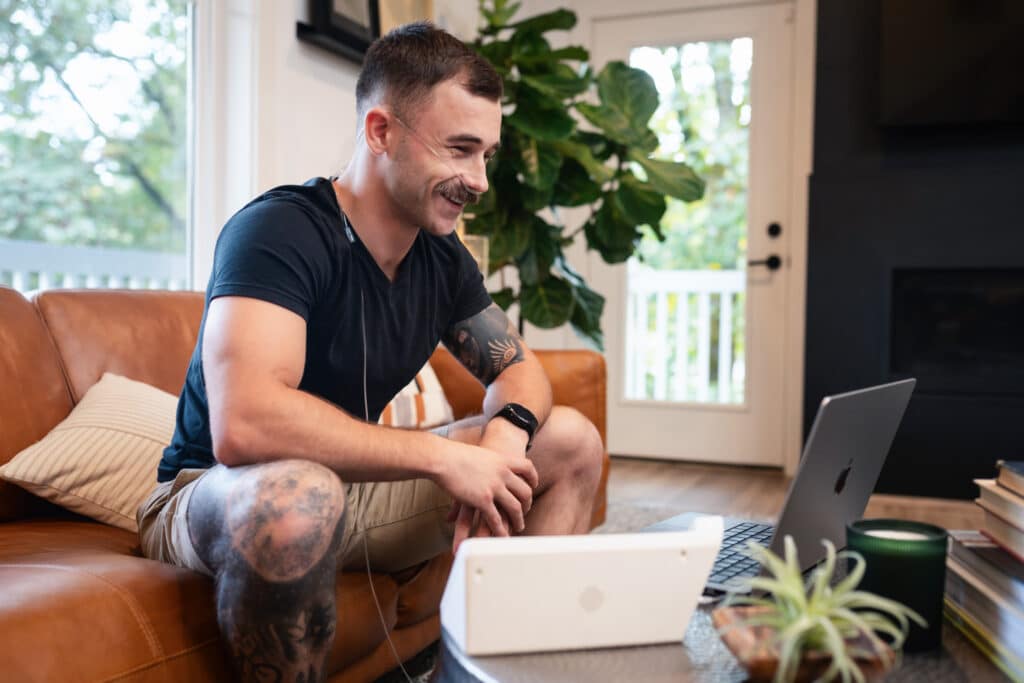
- You use a sensor and tablet to track your breathing.
- You follow guided sessions twice a day for 28 days.
- You get real-time feedback and coaching to normalize your breathing.
Real Results from Freespira Users
- Most people feel better fast: About 91% of users saw a big drop in panic symptoms after using Freespira.3
- People stick with it: In a study, 85% of users completed the full program—showing it’s easy to use and fits into daily life.3
- Long-term relief: Over 70% of users said they were still panic-free a year after treatment.3
- It’s trusted and approved: Freespira is FDA-cleared and used by several health plans and the U.S. Department of Veterans Affairs.
Freespira doesn’t just mask symptoms—it helps fix the underlying cause.
If anxiety or panic attacks are holding you back, your breathing might be the key. CO₂ hypersensitivity is a real, treatable condition—and Freespira offers a proven way to take control.